Louise and Rob: Day One

We wake up after barely sleeping at all, Rob is anxious and excited as this is his first flight, and Louise is really nervous and excited because, well just because we’re finally going to Japan!

Bento

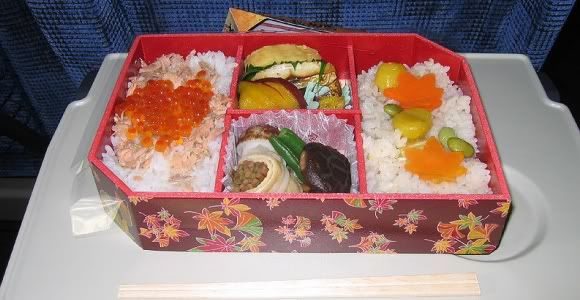
Bento is a single-portion meal that can be either homemade or takeout. Basically it's a pack-up, but Japanese style.

Louise and Rob: Day Two

We wake up jetlagged, but pleased we didn’t draw the blinds, the view is still amazing, and we can watch ant-sized Japanese people rushing to work while we feast on Milk Pocky, Koala’s March biscuits and odd textured buns masquerading as donuts, all washed down with cold coffee and grape Fanta.

Train Stations

No doubt you've heard all about Tokyo train stations. The horror stories of how busy they are, how confusing the maps are, how people get pushed onto rush hour trains. Forget all of your preconceptions - Tokyo has possibly the most efficient train station in the world

Louise and Rob: Day Three

We wake up super early again – a combination of jet lag and excitement, we’re going to Ueno Zoo today! This is one of the things we planned immediately when we decided to go to Tokyo, so we’re really looking forward to it, particularly because this will be the first time either of us have ever seen a panda.

Asakusa

Asakusa (浅草) is a district in Taitō, most famous for the Sensō-ji, a Buddhist temple. Asakusa is Tokyo's oldest geisha district and a former entertainment district. Asakusa's main attractions are a number of shrines and temples, including the Sensō-ji, a small carnival complex called Hanayashiki and traditional activities such as river cruises and rickshaw rides.

Showing posts with label travel advice. Show all posts

Friday, 21 January 2011

Romance Car


The Romance Car (ロマンスカー, or 'Romansukā') is a luxury limited express service on the Odakyu Electric Railway south-west of Tokyo. As its name suggests, its a pleasant and relaxing way to make a journey, although that's not to say it's strictly for couples - there's no stigma about work colleagues or friends sharing the Romance Car, despite its name.

However, it is still a very nice nice journey to make with a loved one. The seats swing sideways, enabling you both to look out of the window - they also swing round when the train reaches the end of its line so you're never left facing backwards.

Image: muza-chan.net

Sunday, 16 January 2011

Louise & Rob: Day Three

We wake up super early again – a combination of jet lag and excitement, we’re going to Ueno Zoo today! This is one of the things we planned immediately when we decided to go to Tokyo, so we’re really looking forward to it, particularly because this will be the first time either of us have ever seen a panda. Louise starts the morning by squeezing herself into the short, but deep bathtub, and enjoy the feeling of being in a bath up to her ears, followed by flakey croissants from the konbini, washed down with matcha (a type of powdered green tea).

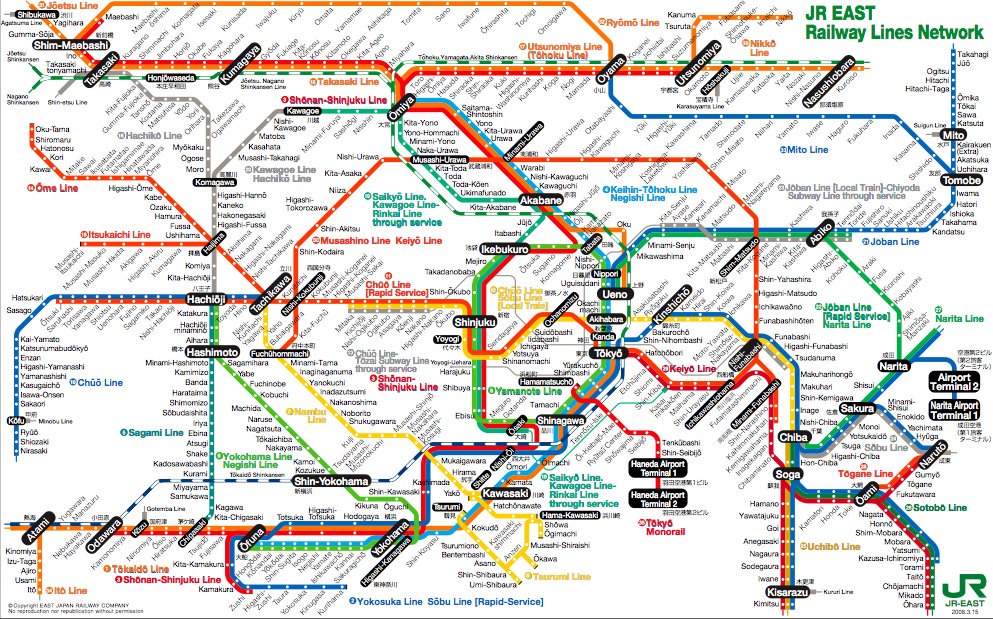
We try and find Shinjuku train station for the first time, and end up getting lost. Soon enough though, after following the huge train tracks (they must lead to a station eventually, right?) we happen across Shinjuku Station. How something this vast could have possibly escaped our attention is beyond us! Our first experience of Japanese rail travel is ultimately very positive, however the process was a confusing one to the uninitiated – ie. us! First, we must find our destination on a huge-giant complicated map.

 Photo from: Alien2Nrs

Then we find the corresponding fare, and insert this into an automated machine, which spits out two tickets. But what to do with them? We study the locals and see the turnstiles snatch the ticket from your hand, let you through, and zip the stamped ticket out the other end in under a second – everything here is as fast as it could be.

We then take our places on the platform (once we find it), which has clever markings on signifying where the doors will be once the train arrives. This means people get the chance to queue. And the Japanese are far better than us Brits at queuing – and that’s the one thing we’re known as being good at!

We arrive in Ueno and stroll through the park, enjoying the cooler weather and haughty looking cats weaving through our legs. The zoo is quite a walk away, so we have plenty of opportunity to view Japan at a slow, relaxed pace, which is great.


Upon arriving, we see a sign that tells us some very sad news – the zoo’s giant panda, Ling Ling, had died earlier that year. This is a shock to us, and while we’re sad we resolve not to let this ruin our day since we won’t have the chance to come back here for a long time.

Once we get a map of the zoo we see that there are still plenty of exciting animals to see. Louise is particularly excited about the Fennec fox and polar bears, and Rob can’t wait to see the gorillas and bears (his hairy cousins).


We’re really hungry so after gawping at a few monkeys and deer, and negotiating a few troops of schoolchildren, we head for the cafe. Armed with three different phrasebooks, Rob resolves to give the language a proper whirl this time. After establishing the fish and mushroom content of most of the menu items, we opt for chow mein noodle-stuffed omelettes, which are absolutely delicious, and we go back for shaved ice for dessert – partly because it looked really nice and is something Louise had always wanted to try, and partly because Rob wasn’t done experimenting with his Japanese!


After lunch, we take the monorail and head over to see some penguins, who were very diplomatically sharing their open enclosure with a visiting heron-style bird. It was probably amusing to see us more fascinated by this local creature than the actual exhibits.

We then wander off to look at a peculiar statue which, to our amazement, suddenly moves. That’s no statue, it’s a shoebill! We spend a while debating how often people must laugh at his face, and how sorry we feel for him, before deciding he’s handsome in an ugly kind of way. We are then distracted by okapis, which are among Louise’s favourite animals of all-time (half zebra, half giraffe – what’s not to love?). Next up is the vivarium, where we’re fooled for the second time of the day by an animal masquerading as an inanimate object. This time it’s the giant salamanders. Giant being the operative word – these things are huge, and appear to be made out of boulders. Here we also see arowana (our first view of these beautiful fish outside of Animal Crossing), alligators and Galapagos tortoise.

We see giraffes and rhinos on our way to the hippos – pygmy and regular. The crowds are enamoured with the normal hippos, and the poor pygmy is almost ignored even though he’s doing his best.

We start to get a little worried when we can’t find the Fennec foxes, despite following the map, before realising that they live in the small animal house which we’re standing right next to. Sadly this means no photography as they’re nocturnal, but that’s okay as we still get a really good look. Louise is amazed to find that Fennec foxes are even cuter in real life than she’d ever imagined. We’re also amazed by very bouncy kangaroo mice, a spindly-legged mouse deer and a very pink armadillo.


We take a stroll back to the East Garden to see the bears and big cats. We walk back by way of the giant anteater enclosure and we’re really amused to see the animal in a tree taking the biggest wee we have ever seen. Louise is giggling louder than the children watching.

We head for bear hill by way of the sealions and polar bears (which are bizarrely not part of bear hill). We spend a long time watching the polar bears (which Louise thinks look like puppies when they are wet) and trying to snap a good picture of them, as it’s rare to get polar bears in zoos back home. We’re pleased to see they aren’t exhibiting the same unhappy headbob as is common with captive bears.


We spend a while wandering around bear hill, before moving on to view the lions and tigers, and finally onto the gorillas, we find them particularly amusing as they adopt such human-like mannerisms. We end our day with a walk along the sun dappled woodland walk and buying Japanese sweets and panda-themed goodies from Little Trunk, the gift shop.

We catch the train back to Shinjuku, just as it begins to rain. We find the Japanese attitude to rain quite amusing, covering heads with newspapers, laptop bags, anything to hand really to keep them dry. Being British and from the North we’re fairly used to wet weather, so enjoy our walk back to the hotel, where we spend the evening with vending machine beers, crisps and more Pocky, and watch Japanese soap operas, with plenty of overwrought acting.

Sunday, 9 January 2011

Keisei Skyliner

Photo from: Japanese Lifestyle

The Keisei Skyliner (スカイライナー) is a limited express train service between major Tokyo train stations and Narita Airport. This service is slower than the N'EX however it is between 1000 and 2000JPY cheaper.

Be sure that if you are in a hurry (ie. going TO the airport) you make sure you get on the limited express service instead of the local, as the local service stops at every station along the route and can take a very long time. Louise made this mistake on her way to the airport and got really worried she was going to miss her flight! However it did offer a nice scenic route to the airport, until she became worried, hopped off the service and onto the express. Whoops!

Thursday, 6 January 2011

Narita Airport

Narita Airport (成田空港) is Japan's largest international airport.

 Photo from: Anna Aero

Getting through customs takes a little while, but is done in the super efficient Japanese way - which includes taking your pictures and fingerprinting you. So it might be a good idea to do a last minute scrub-up on the plane so you don't land looking like you've just been on a 13+ flight! Plus, it's a good idea to use the bathroom on the way to customs as the first time we visited we were waiting for over an hour.

After picking up you luggage - go explore, you are now in Tokyo! There are plenty of shops and restaurants, covering a range of different foods including a very good sushi spot and a McDonalds. You can grab a kimono or suit of samurai armour or stock up on Japanese snacks from the range of shops.

Narita airport also has a good selection of ATMs which take foreign credit/debit cards as well as currency exchange desks.

There are a range of travel options from the airport to Tokyo proper, including the limousine bus, the Keisei Skyliner and the Narita Express train, both of which visit main hotels or link up with other rail networks.

Wednesday, 5 January 2011

Train Stations

Photo from: Travel Pod

No doubt you've heard all about Tokyo train stations. The horror stories of how busy they are, how confusing the maps are, how people get pushed onto rush hour trains. Forget all of your preconceptions - Tokyo has possibly the most efficient train station in the world, and as Japanese spend a large portion of their time in the stations they can be a pretty nice place to be, with shops, restaurants and izakayas and almost always feature signs in both Japanese and English.


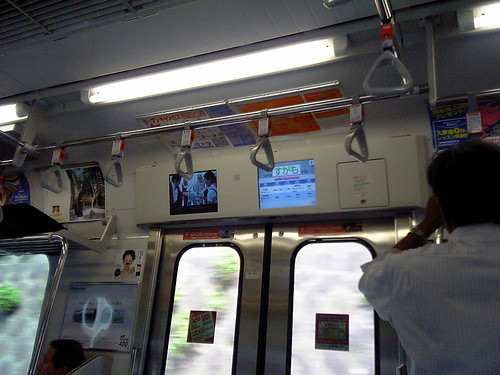
The most important line you need to know about is the Yamanote line - which is Tokyo's busiest commuter rail line. The Yamanote is recognisable by the green train cars, and travels in a big loop around Tokyo's most important destinations, such as Shinjuku, Shibuya, Harajuku and Ikebukuro. The trains run every 2.5-4 minutes and are consistently on time. Once onboard you can follow the stops by means of small TV screens over every door. Each station is also announced and features its own short jingle - which seems to rouse fast asleep Japanese communters quicker than a slap in the face (not that we've tried this!).

So now you know a little bit about the trains it's time to...

Buy A Ticket

The best was to buy a train ticket (unless you are planning on riding the shinkansen, or going quite far afield) is the ticket vending machines.

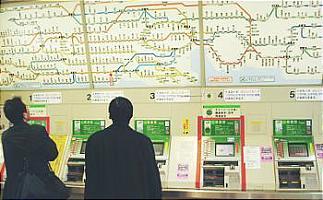
 Photo from: Japan Guide

Above the ticket machines is a station map, in both Japanese and English, you need to locate your station (if you are travelling on the Yamanote line - it's the green loop) and just below the station name you can find the price. You then put in the money for your fare (don't worry - the machines give change!), pick the number of travellers (the default is one), press the button for the correct fare and your ticket/s will be spat out.

You can also visit the manned ticket counter, however as Japanese pronunciation can be difficult this can sometimes be more complicated than the machine.

After buying a ticket, you are ready to...

Go Through The Paid Gate 

Every station that I have visited in Tokyo - including some of the smaller ones - have an automatic ticket gate, with one manned cubicle. To get through the automatic gate you need to feed your ticket into the slot in the machine, at which point the gates will open, when you pass through remember to grab your ticket on the other side of the gate as you will need it to exit the train!

The Platform

Finding your gate is generally very simple as all signage is in both Japanese and English - once on the platform you can grab a drink or snack from one of Tokyo's many vending machines or platform counters. You should then take notice of the markings on the ground - which will mark the position of the doors when the train pulls into the station - once again very efficiently.

 Photo by: Travel Pod

Riding The Train

Once onboard the train take a seat - if there is one! (most Japanese trains have sideways facing seats - so watch out for napping communters who decide your shoulder looks like a comfortable place to rest!) On popular tourist lines - like the Yamanote - station announcements will be made in Japanese and English. If you are on a smaller, more local line then just keep an eye out for the station signs as these will show the station name in English.

 Photo from: Balvig

Once You Arrive

After departing the train leave the platform, make sure you know which exit you need to use - as the myth about Japanese train stations being huge is generally true! Leaving the station by the wrong gate can lead to a lot of confusion and often ends with you getting really lost. All exits are well signposted so if you know which one you want it's really not so difficult. Leave through the automatic gates by placing your ticket in the slot - just like you did to access the platform - but this time it won't be spat out. And that's it - you're out and about and free to explore the fab stalls, shops and food places in the stations.

Narita Express

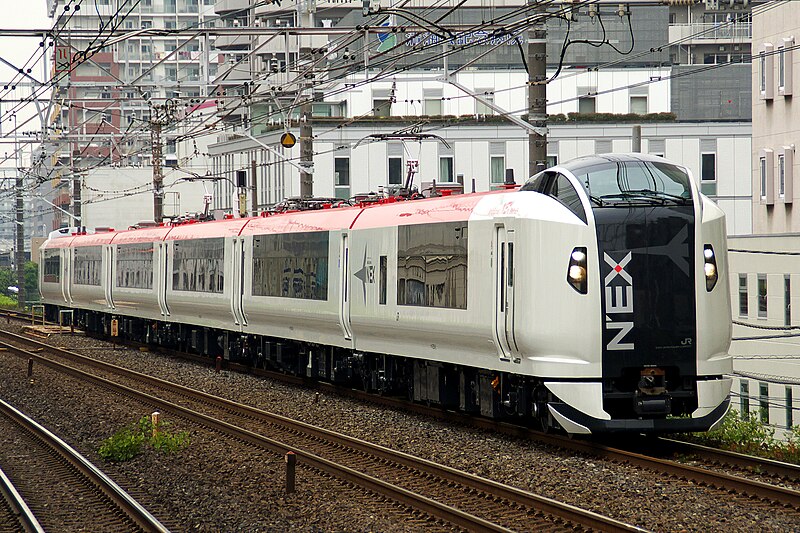
The Narita Express (成田エクスプレス), often abbreviated at N'EX is a train service linking Narita Airport with major Tokyo train stations, it is faster but more expensive than the Keisei Skyliner.


The trains run every 30-60 minutes depending on your destination and costs 3000JPY. It takes approximately 90 minutes to reach Tokyo Station, one of Tokyo's major transport hubs.

Tuesday, 4 January 2011

Shinkansen


Shinkansen are a network of very high-speed trains in Japan, which connect most major cities on the islands of Honshu and Kyushu. They're also known colloquially as bullet trains - and when you consider the fact that they regularly run at 186mph/300kph (which works out at 83 meters per second), you can see why.

They're a technological marvel, against which the rest of the world has been playing catch-up for the past thirty years or so. They're just about managing it now, with several countries boasting high-speed rail or heavily investing in maglev (magnetic levitation - sounds sci-fi, huh?) technology, but Japan really leads the way.

Plus, as a nice touch, they give each service its own cool name - we caught the Kodama on our way from Tokyo to Hakone which, as die-hard Ghibli fans, thrilled us to bits!


 Kodama photo by Mitsuki-2368                                                                                Kodama by Hayao Miyazaki

Related Posts Plugin for WordPress, Blogger...
There are currently Online Users
Twitter Delicious Facebook Digg Stumbleupon Favorites More